
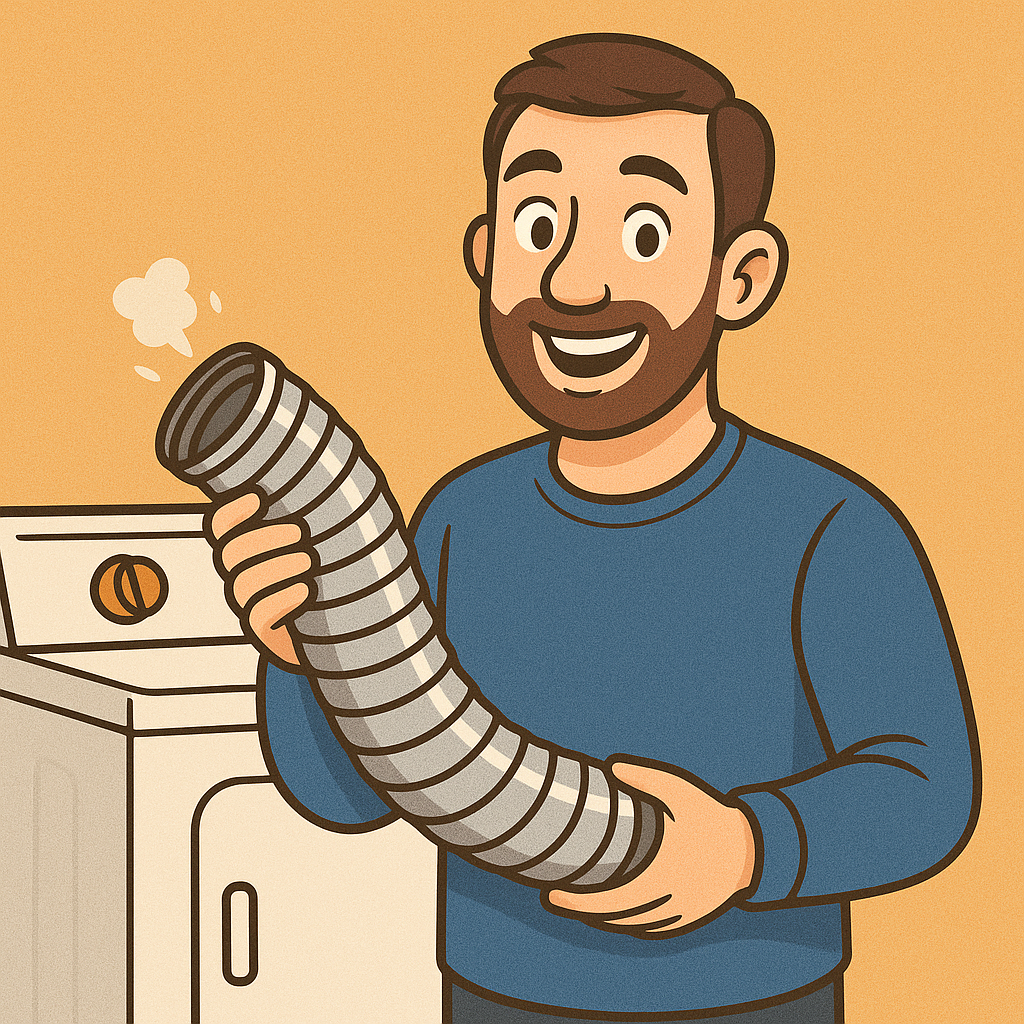
How to Assess and Fix a Clothes Dryer Duct
If your dryer is taking too long to dry clothes, running hotter than usual, or giving off a musty smell, it might not be your dryer’s fault. Often, the real culprit is the dryer duct.
A blocked or damaged dryer duct isn’t just annoying, it can be dangerous. According to the U.S. Fire Administration, thousands of house fires every year are caused by dryers, and most are due to clogged vents.
Let’s walk through how to assess and fix your dryer duct safely and effectively.
Step 1: Locate and Inspect the Dryer Duct
Your dryer duct is the metal or plastic hose that runs from the back of your dryer to a vent outside. Here’s how to inspect it:
✅ Unplug the dryer and pull it away from the wall
✅ Disconnect the duct from both the dryer and the wall or vent connection
✅ Use a flashlight to look inside both ends
✅ Check for:
- Lint buildup
- Kinks or crushed ductwork
- Moisture or mold
- Rips, rust, or disconnection
💡 Tip: Rigid or semi-rigid metal ducts are much safer than foil or plastic flex ducts, which are a fire hazard and often against code.
Step 2: Clean the Dryer Duct
Even if there’s no serious damage, regular cleaning is essential for efficiency and safety.
Tools you’ll need:
- Dryer vent cleaning brush kit (available at most hardware stores)
- Vacuum with hose attachment
- Screwdriver or nut driver (to loosen hose clamps)
Cleaning Steps:
- Feed the brush into the duct and rotate it to dislodge lint
- Vacuum out any loosened debris from both ends
- Clean the vent hood outside and make sure the flap opens freely
💡 Pro Tip: Do this at least once a year, or more often if the dryer runs frequently.
Step 3: Repair or Replace the Duct if Needed
If the duct is damaged, crushed, or made of unsafe material, it’s best to replace it.
Replace with:
✔️ Rigid aluminum or galvanized steel ductwork (recommended for safety and durability)
✔️ Use foil tape to seal joints (not duct tape, which can dry out and fall off)
✔️ Keep the run as short and straight as possible to reduce lint buildup
Avoid:
🚫 Plastic or vinyl ducts
🚫 Long, twisting paths
🚫 Pushing the dryer too close to the wall (can crush the duct)
Step 4: Reconnect and Test
After cleaning or replacing the duct:
✅ Reconnect both ends securely with hose clamps or foil tape
✅ Plug the dryer back in and push it gently into place, leaving a few inches of clearance
✅ Run the dryer on air fluff and check that air is flowing freely out of the vent outside
If air isn’t moving strongly or the flap isn’t opening, there’s still a blockage, or a bigger issue like a clogged vent cap or bird nest.
Final Thoughts: Small Fix, Big Impact
Cleaning or repairing your dryer duct may not be glamorous, but it’s one of those simple home maintenance tasks that can save energy, extend your appliance life, and even prevent a fire.
Whether you’re a homeowner or a landlord, make this a regular part of your property care routine.
Should this be too big a job, Initial Property Management has the resources to help you address this and many other issues in your home. Let’s connect and see how we can help you manage your investment.